04 // Biomedical Engineering
Biomechanical Properties of Intraocular Lens Implants
University of Toronto — Biomaterials Coursework · 2024
Intraocular lenses (IOLs) are implanted to replace the eye's natural lens during cataract surgery — one of the most common surgical procedures globally. A key design requirement is the ability to fold the lens for insertion through the smallest possible incision, reducing surgical trauma and recovery time.
This research project tested three IOL materials — hydrophobic acrylic, hydrophilic acrylic, and PMMA — to determine which allows the smallest incision size for safe lens insertion.
Highest compressive forces, least flexible — requires the largest incision. The original rigid IOL material.
Enables 2+ mm reduction in incision size. Foldable, low water uptake. Optimal material per study findings.
Slightly lower performance than hydrophobic. Higher water content, unique wrinkling behavior under compression.
"Hydrophobic acrylic is the optimal material for reducing incision size, though clinical considerations such as cost, surgeon experience, and biocompatibility must also be factored in when selecting an IOL material for a specific patient."
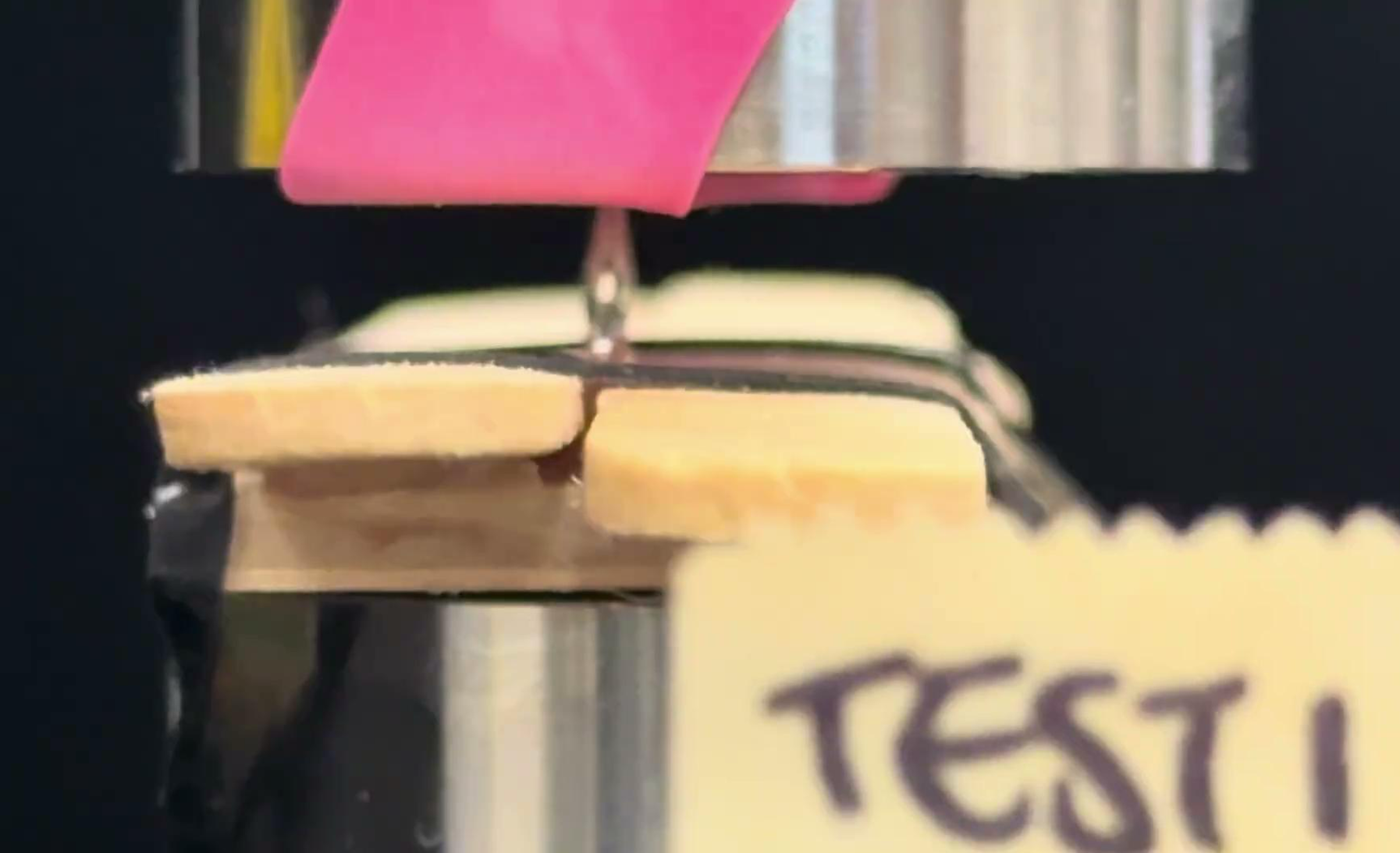
The custom compression rig constrained the lens laterally while a known displacement was applied vertically — replicating the geometry of folding a lens through an injector nozzle. Elastic bands provided a calibrated force that increased with displacement, while the popsicle stick frame maintained consistent alignment across trials.
Side-view filming captured the actual bending profile of each lens material at equivalent displacement levels. Bending angle measurements from the footage were correlated with force readings to build a more complete picture of material compliance — going beyond a simple force-displacement number to understand the spatial deformation each material undergoes during real surgical insertion.